Launching a complex building assessment in a week
The fastest way to ship something complex is to have already built the hard parts.
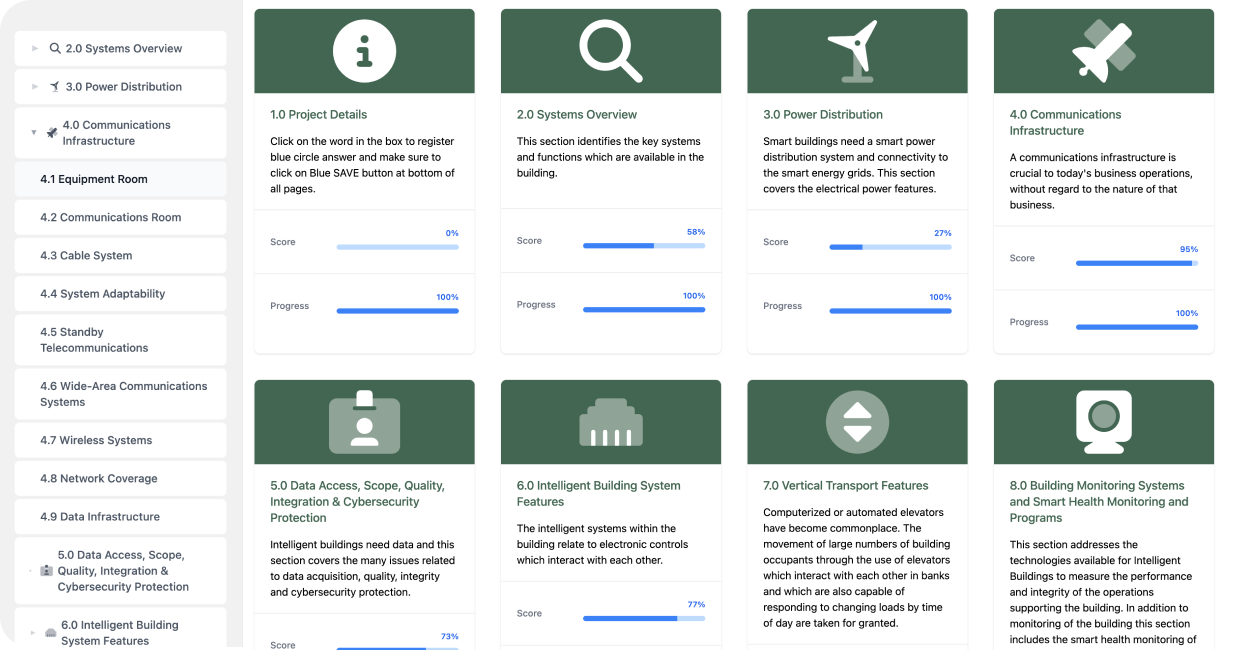
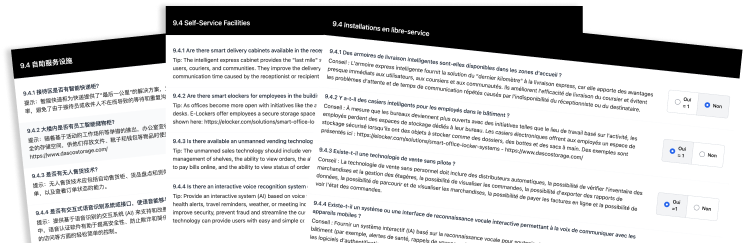
The Building Intelligence Quotient (BiQ) is an assessment designed to help building owners see how well they're using building-automation systems, and where they could get more from them. On paper it's the kind of project that becomes a long, expensive build: hundreds of questions across multiple sections; answers gathered from several contributors over weeks; multi-axis scoring; generated reports; and the whole thing offered in both English and Mandarin. That spec normally means months of engineering. BiQ went live in about a week.
Configured, not coded
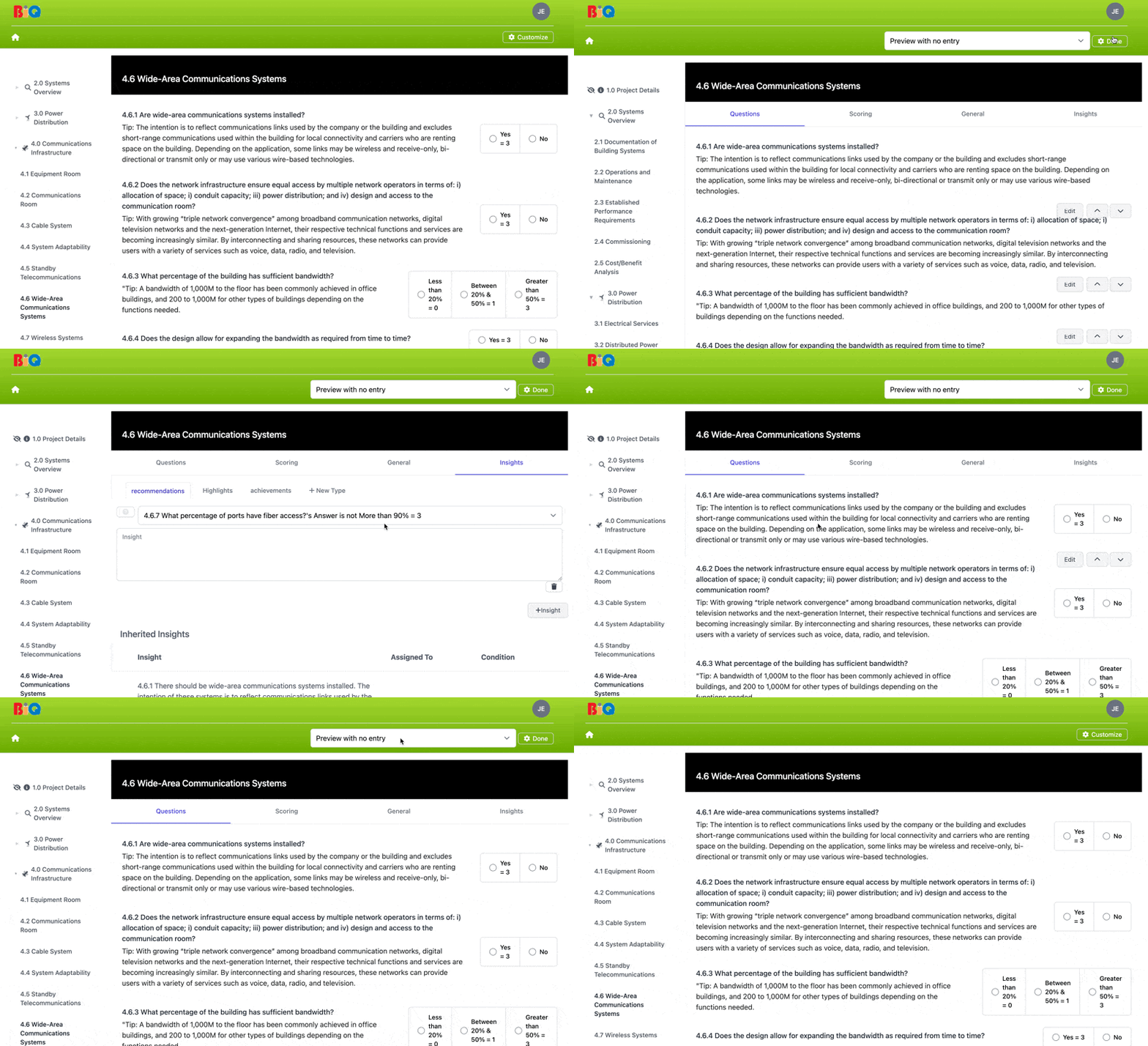
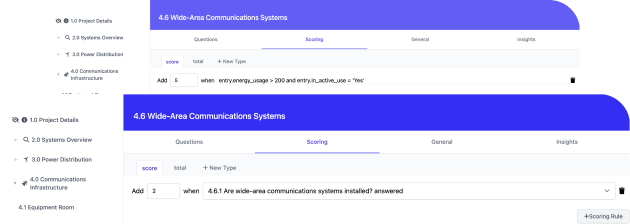
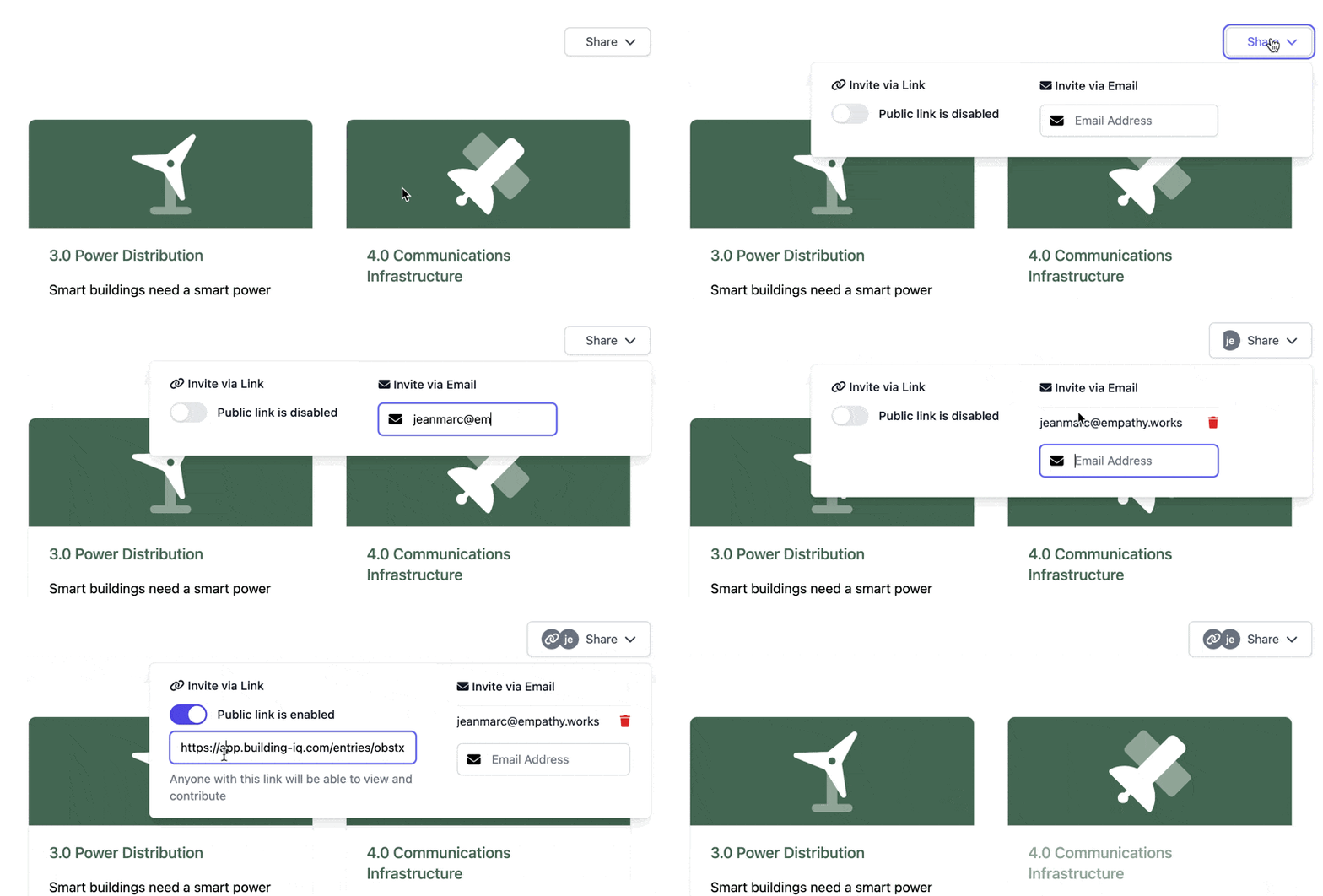
It could, because every hard part was already solved. BiQ was the first assessment built on Measure/Change — our platform for exactly this kind of program — and the platform already did the things that make these builds expensive. A long assessment that several contributors can fill in together over many sittings, sharing specific pages around as they go. Multi-axis scoring — a headline number, percentages, and scores on subsets of questions, all at once. Report generation. And first-class localization, so offering the assessment in Mandarin alongside English was a setting, not a translation project bolted on afterward.
So this wasn't really a development project; it was a configuration one. We stood the platform up, and the BiQ team shaped their own assessment, scoring, and reports — launching in days what would otherwise have been a year of work and a budget to match.
BiQ was the first thing we launched on Measure/Change. It proved the premise the platform was built on: the second time you build something this complex, it shouldn't cost what the first one did.
The Solution
Every piece of BiQ was configured on top of capabilities the platform already had: